 Ferndale Siding
 Building a Deck That Can Handle Birch Bay
Birch Bay sits right on the water, and that changes what a deck has to survive. A deck built the same way you'd build one ten miles inland in Ferndale will age faster here. Salt-laden air off the bay works on metal fasteners and connectors year-round. Driving rain off Georgia Strait finds every gap in flashing and end-grain. And the long, wet, low-sun stretch of a Whatcom County winter means moss gets a real head start on any horizontal surface that doesn't shed water and dry out quickly. None of this means you can't have a great deck in Birch Bay — it means the material choices, fastener choices, and framing details matter more here than they do somewhere drier and further from the shoreline.
This page covers what we've learned building and repairing decks for homes in and around Birch Bay: what actually holds up, what fails early, and how we approach a custom build so you're not redoing it in eight years.
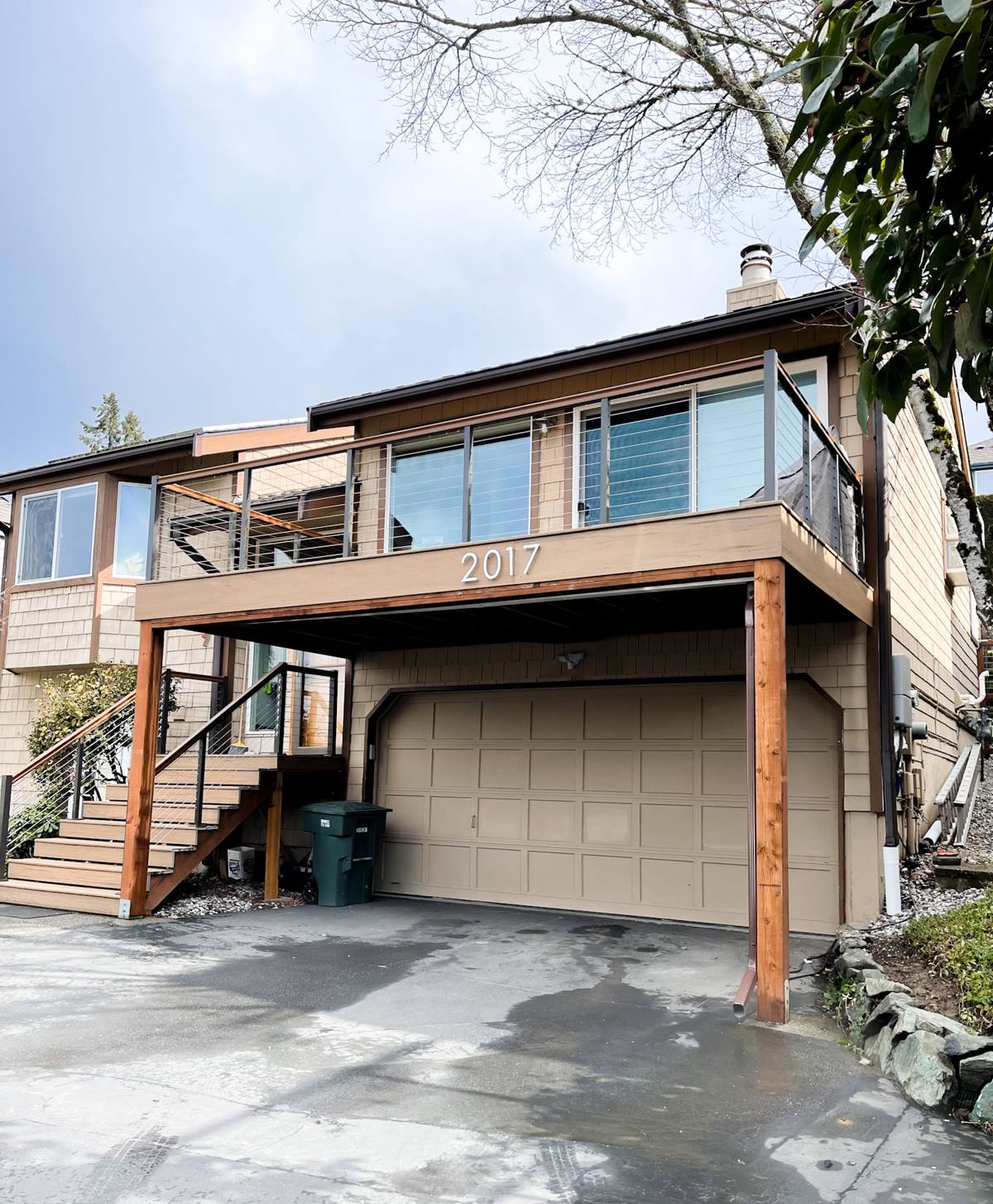
What the Birch Bay Coastline Does to an Ordinary Deck
Salt Air and Metal Fasteners
Airborne salt doesn't just affect homes with a direct water view. It travels on the wind and settles on anything outside, including decks a few blocks back from the shoreline. Standard electro-galvanized screws and joist hangers are made for general outdoor use, not sustained salt exposure — they'll show rust bloom and pitting well before a wood-treated or composite deck's structure would otherwise need attention. Once a fastener starts corroding, it loses holding strength quietly, long before it looks bad enough to worry about.
Standing Moisture and Moss
Whatcom County gets a real wet season, and Birch Bay's marine exposure adds fog and dew on top of rainfall. Any deck surface that stays damp — because of poor slope, tight board spacing, or shade from trees or the house — becomes a moss farm by the second winter. Moss holds moisture against the decking surface, which accelerates rot in wood and can make composite and even some capped boards slick and dark over time if they're never cleaned.
Wind Exposure
Open lots near the bay catch more wind than sheltered inland properties. That affects railing design, how furniture and structures are anchored, and how we brace larger or multi-level decks so they don't develop movement or squeaks at the connections over time.
Choosing Decking Material for Salt Air and Moss
There's no single "best" decking material — there's a best material for your budget, your maintenance appetite, and how close your lot sits to the water. Here's how the common options actually compare under Birch Bay conditions:
| Material | How It Handles Salt Air | How It Handles Moss/Moisture | Maintenance |
|---|---|---|---|
| Pressure-treated fir/pine | Fine if fasteners are corrosion-rated; wood itself isn't affected by salt | Needs regular cleaning and re-sealing or moss returns fast | Highest — annual cleaning, periodic staining/sealing |
| Cedar | Naturally rot- and insect-resistant; still needs stainless or coated fasteners near the water | Better natural resistance, but still needs airflow and cleaning | Moderate — periodic oiling to hold color and resist graying |
| Composite decking | Unaffected by salt itself; hardware still needs to be corrosion-rated | Sheds water well; surface can still get moss/algae film if shaded and never washed | Low — occasional washing, no staining/sealing |
| PVC/capped polymer | Fully unaffected by salt exposure | Best moisture and moss resistance of the group | Lowest — wash as needed |
For homes close to the bay or in more exposed, wind-driven-rain locations, we lean toward composite or capped polymer decking specifically because it doesn't absorb moisture into the board itself, which is the root cause of both rot and most moss growth. For homeowners who want the look and feel of real wood and are willing to keep up with cleaning and re-sealing, cedar with the right hardware is still a solid, honest choice — it's a maintenance trade-off, not a durability problem, as long as it's cared for.
Framing, Fasteners, and Footings Most Homeowners Never See
The parts of a deck nobody looks at are the parts that determine whether it's still solid in fifteen years. In Birch Bay's environment, we treat these as non-negotiable:
- Stainless steel or heavy hot-dip galvanized fasteners for anything within the structural connections — ledger bolts, joist hangers, hanger nails/screws — not standard-coated hardware that's fine inland but corrodes faster in salt air.
- Proper ledger flashing where the deck attaches to the house, so wind-driven rain off the bay can't work its way behind the siding at the attachment point — this is one of the most common failure points we find on older decks here.
- Footings sized and set to local frost depth and soil conditions, not just poured to whatever looked deep enough — this is a building code requirement, not an upsell.
- Joist spacing tightened up under composite and PVC decking per the manufacturer's span tables, since these materials often require closer support than solid wood.
- Airflow underneath the deck structure where the site allows it, since stagnant air under a low deck is exactly what keeps framing damp long after a rainstorm has passed.
Skipping any of these doesn't show up on day one. It shows up as rust streaks, soft spots, or a deck that starts to feel less solid five or six years in — right when a homeowner expects a "custom" deck to still look new.
Designing a Deck for the Way Birch Bay Homeowners Actually Use It
A lot of Birch Bay properties are set up for outdoor living — entertaining, water views, or simply enjoying the bay air when the weather cooperates. That shapes some practical design decisions beyond just picking a material:
Railing and Wind
On open or elevated lots, we look at railing height, baluster spacing, and glass or cable rail options that hold up to sustained wind without turning the deck into a wind tunnel or blocking the view you built the deck for in the first place.
Multi-Level and Sloped Lots
Several Birch Bay properties sit on sloped terrain heading down toward the water. Multi-level decks, built-in stairs, and properly engineered footings on a slope take more planning than a simple ground-level platform, and it's where experienced framing really pays off.
Low-Maintenance by Design
Board orientation, gaps, and drainage slope all affect how fast a surface dries after rain — which in turn affects how much moss and mildew you'll be dealing with. We design the surface to shed water on purpose, not as an afterthought.
Our Process for a Custom Deck Build in Birch Bay
- On-site consultation. We look at your lot's exposure to wind and salt air, existing drainage, and how you actually want to use the space.
- Material and design discussion. We walk through the honest trade-offs between wood and composite/PVC options for your specific location and budget — no pressure toward the most expensive option if it's not the right fit.
- Permitting. Deck projects in Whatcom County typically require a permit; we handle that process so you don't have to chase it down yourself.
- Framing and footings. Built to code with corrosion-rated hardware and proper ledger flashing from the start.
- Decking, railing, and finish work. Installed to the manufacturer's specifications for your chosen material, including fastening systems suited to salt air exposure.
- Final walkthrough. We go over basic care for whatever material you chose so it stays looking right.
Keeping a Coastal Deck in Good Shape
Whatever material you choose, a little regular attention goes a long way in this climate. A simple seasonal checklist:
- Sweep debris and standing leaves off the surface regularly, especially in fall — trapped organic matter is what moss and mildew feed on.
- Rinse salt residue and grime off the surface a few times a year, particularly on decks closer to the water.
- Check railing posts and stair connections annually for movement or loosening hardware.
- For wood decking, plan on re-sealing or oiling on the manufacturer's recommended schedule — don't wait until it's visibly gray and dry.
- Keep an eye on the ledger-to-house connection for any staining or soft siding nearby, which can signal a flashing issue before it becomes a bigger repair.
- Trim back overhanging branches or vegetation that keeps sections of the deck shaded and slow to dry.
What a Custom Deck in Birch Bay Costs
Every deck is different, but the main cost drivers are consistent. This gives you a general sense of where the money goes:
| Factor | How It Affects Cost |
|---|---|
| Decking material | Pressure-treated is the most affordable; cedar and composite cost more upfront; PVC/capped polymer is typically the highest material cost but the lowest long-term maintenance cost |
| Size and footprint | Larger square footage and multi-level designs increase both material and labor costs |
| Height and slope | Elevated decks and sloped lots require more engineering, framing, and stairs |
| Railing type | Standard wood or metal balusters cost less than glass panel or cable rail systems |
| Fastener and hardware upgrades | Corrosion-rated hardware for salt-air exposure adds a modest cost relative to the protection it provides |
| Permitting | A required part of most deck projects in the county; cost varies by project size and scope |
Rather than quote a number that won't mean much without seeing your lot, we'd rather walk the site and give you a real range based on your actual footprint, material choice, and site conditions.
Why Hire a Crew That Already Works in Birch Bay
A deck built by someone unfamiliar with this stretch of coastline can look identical to a well-built one on the day it's finished — the difference shows up years later. Crews who work Birch Bay regularly already know to spec corrosion-rated fasteners as standard, not an upsell; already know which decking materials shrug off moss versus which ones need diligent upkeep; and already understand local permitting and code requirements for footings and structural attachment. That familiarity is what keeps a "custom deck" from turning into a maintenance headache by year five. It's also just less back-and-forth for you — fewer surprises, fewer change orders, and a build that accounts for the salt air and rain from the design stage, not as a fix later.
If you're planning a custom deck in Birch Bay, we're happy to come take a look at your property, talk through material options honestly, and put together a free, no-pressure estimate. Use the form below to get started.