 Ferndale Siding
 Why Birch Bay Decks Wear Out Faster Than Most
A deck built a mile inland in Whatcom County ages differently than one sitting close to Birch Bay's shoreline. Salt-laden air moves in off the water and settles into every joint, fastener head, and cut end of lumber on the deck. Add the region's driving rain — the kind that comes in sideways during a fall or winter storm — and water gets pushed into places a deck built for a drier climate was never designed to shed. Then there's moss season, which in this part of Washington isn't really a season at all. It runs long, and it turns any shaded or north-facing deck surface into a slow, steady moisture trap for months at a time.
None of this means a deck near Birch Bay is doomed. It means the repair standard has to account for salt, standing moisture, and organic growth as ongoing conditions, not one-time problems to fix and forget. A repair that would hold up fine in a drier inland town can fail early here if it doesn't account for what this coastline actually does to wood, fasteners, and finishes year after year.
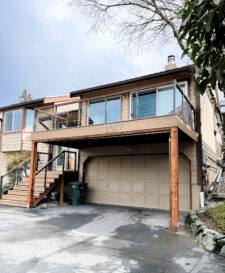
How to Tell If Your Deck Needs Repair
Soft Spots and Spongy Boards
Press down with your foot along the deck boards, especially near the house and at the outer edges. Any give, sponginess, or a dull thud instead of a solid sound usually means moisture has gotten into the wood fiber. This is one of the earliest and most reliable signs of trouble, and it's almost always worse underneath than it looks from the top.
Rust Streaks and Failing Fasteners
Salt air accelerates corrosion on any fastener that isn't rated for coastal exposure. Rust streaks bleeding down from screw or nail heads, popped fasteners, or boards that have started to cup or curl at the edges are all signs that the original hardware wasn't built for this environment — or has simply reached the end of its service life.
Railing and Stair Movement
A railing that flexes noticeably when you lean on it, or stair stringers that feel less solid than they used to, point to connection failure at the framing level. This is a safety issue first and a cosmetic one second, and it shouldn't wait.
Before calling anyone, it's worth doing a basic walk-around yourself:
- Check for soft or spongy decking, especially in shaded or low-sun areas
- Look for rust stains, popped screws, or corroded nail heads
- Push on the railing at several points to check for movement
- Look underneath the deck for green or black staining on the framing
- Check where the deck attaches to the house for gaps, staining, or soft wood
- Note any areas where moss or algae never fully dries out between rains
What a Proper Deck Repair Actually Covers
Framing and Ledger Board
The ledger board — where the deck attaches to the house — is the single most important connection on the structure, and it's also the spot most likely to trap water against the building. A correct repair means pulling back decking where needed to actually inspect the ledger and the rim joist behind it, not just patching what's visible from above. Any rot found here gets cut out and sistered or replaced, not painted over.
Decking Boards and Fasteners
Individual board replacement only works if the framing underneath is sound. We replace fasteners with hardware rated for coastal and treated-lumber exposure, since mismatched or standard-grade screws are a common reason repairs fail again within a couple of years near the water.
Railings and Stairs
Railing posts are only as good as what they're bolted to. A wobbly railing often isn't a railing problem at all — it's a sign the blocking or framing behind it has softened. We check and reinforce that connection point before we touch the railing itself.
Flashing and Water Management
Proper flashing at the ledger and around any posts that penetrate the deck surface is what keeps driving rain from working its way into the structure over time. Where flashing is missing, cracked, or was never installed correctly, we add or correct it as part of the repair rather than treating it as a separate upsell.
Repair or Replace: Weighing the Real Cost Factors
Not every deck problem calls for a full rebuild, and not every repair is worth doing if the underlying structure is compromised. The table below covers the main factors that push a project one way or the other.
| Factor | Favors Repair | Favors Replacement |
|---|---|---|
| Framing condition | Solid, dry, isolated soft spots | Widespread rot in joists or ledger |
| Age of structure | Under 10-15 years, good original build | Original fasteners and flashing long outdated |
| Decking material | A few damaged boards among sound ones | Most boards cupping, splitting, or rotted |
| Railing/code status | Sound connections, just cosmetic wear | Unsafe railing height or spacing by current code |
| Budget timeline | Want to extend usable life a number of years | Ready to invest once and stop patching |
In practice, most decks we look at near Birch Bay fall somewhere in the middle — sound framing but failing hardware and worn decking, which is a straightforward repair. The exceptions are usually older decks that were never properly flashed at the ledger, where water has been getting into the framing for years without anyone knowing.
Our Deck Repair Process
- Inspection. We check the ledger, framing, fasteners, and decking from both above and below wherever access allows.
- Honest diagnosis. We tell you what's actually wrong, what's cosmetic, and what's structural — no inflated scope.
- Written plan. A clear scope of work and price range before anything is touched.
- Repair. Rot removed and replaced, fasteners upgraded, flashing corrected, boards reset or replaced as needed.
- Finish and protect. Any exposed wood is sealed or finished appropriately for coastal exposure.
- Final walkthrough. We go over the work with you before calling the job done.
Material Choices That Hold Up to Salt Air and Moss
For framing repairs, we favor properly treated lumber rated for ground contact or high-moisture exposure, since standard interior-grade lumber has no place in a coastal deck rebuild. For fasteners, stainless steel or heavily coated coastal-rated hardware costs more up front but avoids the rust bleed-through and early failure that standard fasteners show within a few seasons this close to the water.
On the decking surface itself, both quality wood and composite boards can work here — the right choice depends on your maintenance appetite. Wood decking looks and feels traditional but needs regular cleaning and refinishing to keep salt air and moss from getting a foothold in the grain. Composite decking resists moisture absorption and won't rot, but it still needs to be kept clear of trapped moss and debris, since even non-organic materials can develop surface staining if organic growth is left to sit. We'll walk through the honest maintenance trade-offs of each rather than pushing one option.
Seasonal Maintenance That Extends the Life of a Repair
A repair done right will still need some seasonal attention in this climate. Moss and algae should be cleared off the deck surface before they establish a real foothold, particularly in shaded corners and under railings where airflow is limited. Gutters and downspouts near the deck should be checked so runoff isn't dumping extra water onto the structure during heavy rain. Any wood surfaces benefit from a fresh sealer or finish on a regular cycle rather than waiting until graying or cracking is already visible. None of this is complicated, but skipping it is the most common reason a good repair doesn't last as long as it should.
Why Hiring a Crew That Already Works Birch Bay Matters
Coastal properties around Birch Bay deal with wind exposure, salt drift, and drainage patterns that don't show up the same way on an inland job a few miles away in Ferndale. A crew that's already worked decks in this specific area knows which details tend to fail first here — the fastener choice, the ledger flashing, the shaded north side that never quite dries out — because we've seen it repeatedly, not because we're guessing from a general repair checklist. That local familiarity means fewer surprises during the inspection and a repair plan built around how this coastline actually behaves, not a generic approach borrowed from a drier region.
If your deck is showing soft spots, rust stains, or railing movement, we're glad to take a look and give you a straightforward, no-pressure estimate — just fill out the form below to get started.