 Ferndale Siding
 Storm Damage Roof Repair for Lummi Island Homes
Lummi Island sits out in the marine weather that rolls through Whatcom County, and that means its roofs work harder than roofs a few miles inland in Ferndale or Bellingham. Wind gets a longer run-up over open water before it hits a roofline. Rain comes in sideways more often than it falls straight down. And when a storm does damage to shingles, flashing, or sheathing, the fix has to hold up to the next round of weather, not just look patched from the ground.
This page is specifically about storm damage roof repair for island homes, not a general roofing overview. If a windstorm has lifted shingles, a fallen limb has punched a hole in your roof deck, or a heavy rain event found its way into your attic, this is what a proper repair looks like and how we handle the logistics of doing that work on Lummi Island.
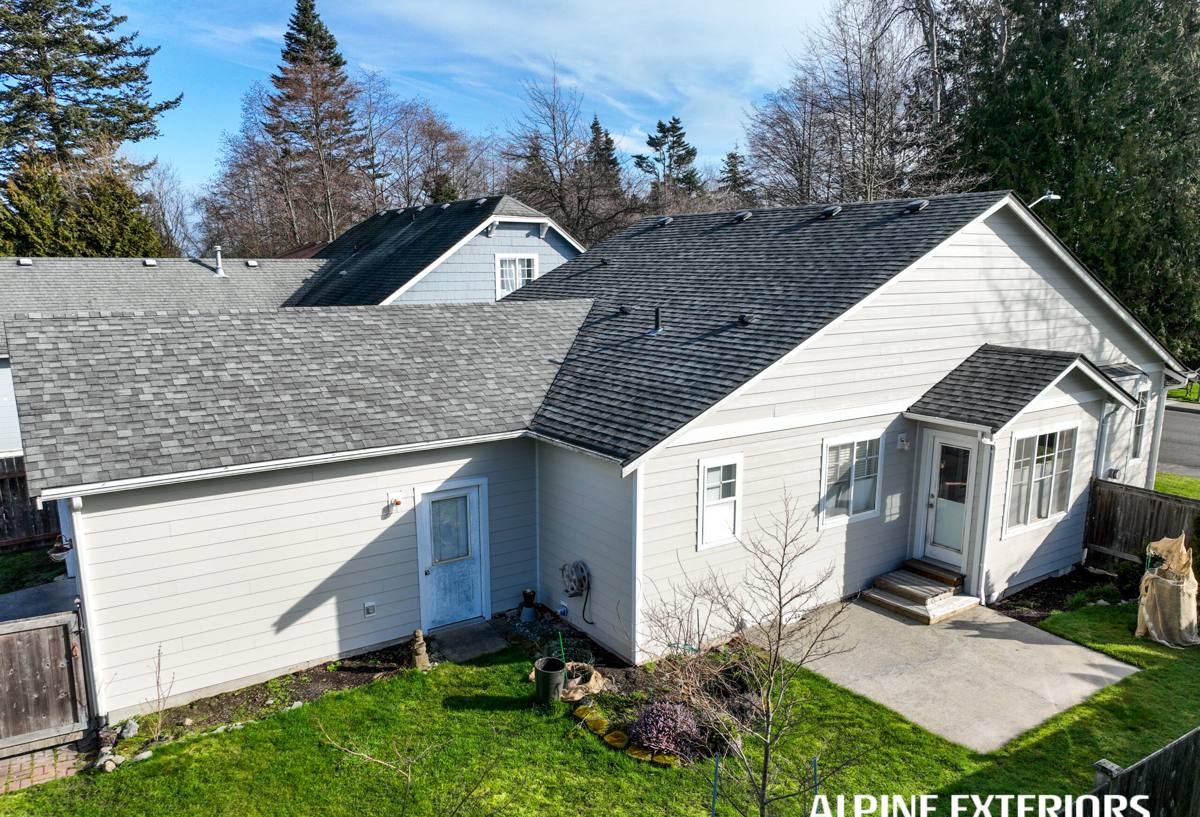
Why Lummi Island Roofs Take a Different Kind of Beating
Every roof in this region deals with rain. Island roofs deal with a combination of factors that push wear faster than what you'd see on a similar house a short drive inland.
Salt Air and Fastener Corrosion
Homes close to the water pick up salt-laden air, and that air is hard on exposed metal. Roofing nails, flashing seams, vent boots, and fastener heads corrode faster near the shoreline than they do further inland. A storm-damaged roof on the island isn't just missing a few shingles — the fasteners and flashing around the damage are often already weakened, which is why a repair that only replaces what's visibly torn up can fail again within a season or two.
Wind-Driven Rain and Flashing
Open water exposure means wind gusts hit roof edges, ridges, and valleys at angles that don't show up as often on a sheltered inland lot. Wind-driven rain doesn't need a hole to get into a house — it can work its way under a lifted shingle tab or past a flashing seam that's just slightly separated. After a storm, the damage that causes the leak is frequently smaller and less obvious than the damage that's easy to spot from the driveway.
Moss, Shade, and Trapped Moisture
Whatcom County's long wet season keeps moss active on north-facing and shaded roof sections for much of the year. Moss holds moisture against shingles and under flashing edges, which softens the roofing material over time. A roof that's already carrying a moss load going into storm season is more vulnerable to wind and impact damage than a roof that's been kept clear, because the shingles underneath are already compromised.
What Storm Damage Actually Looks Like
Not all storm damage announces itself with a hole in the ceiling. Some of the most costly damage starts small and gets found weeks or months later, after moisture has had time to work into the deck and framing. Here's what we tell island homeowners to check after any significant wind or rain event:
- Shingles that are missing, curled, cracked, or lifted at the tabs
- Granules collecting in gutters or at downspout outlets
- Bent, lifted, or missing flashing around chimneys, vents, and roof valleys
- Soft or discolored spots on interior ceilings, especially near exterior walls
- Daylight visible through the roof deck when viewed from inside the attic
- Damaged or dented roof vents, ridge caps, or exhaust caps
- Debris — branches, needles, moss clumps — packed into valleys or against the roof edge, trapping water
- Gutter sections pulled loose or sagging, which changes how water sheds off the roof
If you see any of these after a storm, the roof needs an inspection even if there's no active leak yet. Water damage to sheathing and framing is almost always cheaper to fix the sooner it's caught.
What a Correct Repair Involves
A storm repair that's done right addresses the cause, not just the symptom. That distinction matters more here than in a lot of places, because a rushed patch on a salt-air, wind-exposed roof tends to fail faster than the same shortcut would inland.
Inspecting Beyond the Obvious
We check the area around visible damage, not just the damage itself. A torn-off shingle section often means the surrounding shingles and underlayment took wind stress too, even if they're still nailed down. We also check the roof deck for soft spots, since a leak that's been active for even a short time can soften plywood or OSB sheathing enough that it needs to be replaced along with the shingles above it.
Matching Materials and Reinforcing Weak Points
Where possible, we match shingle type, color, and profile to your existing roof so a patch repair doesn't stand out as a mismatched patch. We also treat storm repair as a chance to reinforce known weak points — re-sealing flashing that's showing early wear, replacing corroded fasteners in the repair zone, and clearing moss or debris nearby so it doesn't undermine the new work. A repair that ignores the moss growing two feet away from it is a repair that will need to be redone sooner than it should.
Repair Scope: Patch, Partial Re-Roof, or Full Replacement
Not every storm-damaged roof needs the same level of work. The right scope depends on how much of the roof was affected, how old the existing roofing is, and what condition the rest of the roof is in. We give you an honest read on which category your roof falls into — we don't upsell a full replacement when a targeted repair will hold.
| Repair Scope | Typically Called For When | Rough Cost Factor | Typical Timeframe |
|---|---|---|---|
| Spot repair | Damage is limited to a small, defined area and the rest of the roof is sound | Lower — a few hundred to low thousands of dollars depending on access and materials | Usually completed in a day, weather permitting |
| Partial re-roof | Damage is spread across one slope, or the roof is older and repairs alone won't hold long-term | Moderate — scales with the square footage being redone | A few days depending on scope and weather windows |
| Full roof replacement | The roof was already near end-of-life, or storm damage affected multiple slopes and the deck | Highest — reflects full tear-off, deck repair, and new roofing system | Typically several days, longer if deck repair is needed |
We walk the whole roof before recommending a scope, not just the damaged section, so the recommendation reflects the roof's actual condition rather than just the storm event that brought you to call.
Our Process From Call to Completion
- Initial assessment. We look at photos or details you can share by phone, then schedule an on-site inspection.
- On-site inspection and documentation. We inspect the damage, check surrounding areas for related wear, and document everything — useful both for our repair plan and for any insurance claim you're filing.
- Temporary weatherproofing if needed. If there's active exposure, we prioritize getting the roof watertight (tarping, temporary flashing) before scheduling the full repair, so the damage doesn't get worse while you wait.
- Written scope and estimate. You get a clear breakdown of what needs to be done and why, in plain language, before any work starts.
- Repair work. We complete the agreed scope, matching materials where possible and addressing related weak points we found during inspection.
- Final walkthrough. We review the completed work with you and make sure everything is buttoned up before we consider the job done.
Working With Your Insurance Company
Storm damage from wind or falling debris is often covered under a standard homeowners policy, while damage from gradual wear — like moss deterioration over several seasons — usually isn't. That distinction is part of why documentation matters. We photograph and describe the damage clearly enough that it can support your claim, and we're glad to talk with your adjuster about the scope of repair and why it's needed. We don't handle the claim for you, but we make sure the paperwork on our end doesn't slow you down.
Why a Crew That Already Works Lummi Island Matters
Lummi Island is reached by ferry, which changes how roofing work has to be planned compared to a job on the mainland. Materials, tools, and crew all have to be staged and moved efficiently, because you can't just run back to the truck for something you forgot. A crew that already works the island builds trips around that reality — loading enough material for the job in one crossing, scheduling around ferry availability, and not treating the island as an afterthought tacked onto a mainland route.
That experience also means we've seen how storms actually behave on island roofs versus mainland ones, and we plan repairs accordingly — from where we expect wind-driven rain to find gaps, to how fast moss recolonizes shaded slopes near the water. It's the difference between a contractor guessing at island conditions and one who's already accounted for them.
Serving Ferndale and the Surrounding Whatcom County Coastline
We're based in Ferndale and work storm damage calls across the Whatcom County coastline, including Lummi Island. Every property here deals with the same underlying climate — salt air, driving rain, and a long moss season — but how that climate hits a specific roof depends on exposure, slope, age, and upkeep. We give island homeowners a straight assessment of what happened, what it'll take to fix it correctly, and what it would cost to let it go unaddressed through the next storm.
If you've got storm damage on a Lummi Island roof, or you just want a professional set of eyes on it before the next system moves through, reach out for a free, no-pressure estimate using the form below.