 Ferndale Siding
 Why Roofs Near Lummi Nation Wear Out Faster Than Roofing Guides Assume
Most roofing advice is written for a generic inland climate — dry summers, the occasional hard rain, freeze-thaw cycles in winter. That's not what a roof faces on homes near Lummi Nation. This stretch of Whatcom County sits close to Bellingham Bay and the open water of the Strait of Georgia, which means the air itself carries salt. That salt settles on metal flashing, fasteners, and gutter systems day after day, and it accelerates corrosion in ways a roof twenty miles inland never experiences.
Add to that the region's driving rain — storms that come in sideways off the water rather than falling straight down — and you get wind-driven moisture forced up under shingle laps and into seams that a standard installation might not fully seal against. Then there's moss. Whatcom County's mix of shade, humidity, and mild temperatures gives moss and algae almost year-round conditions to establish themselves on north-facing and shaded roof slopes, and once moss takes hold it holds water directly against the roofing material, which is exactly what you don't want.
None of this means a roof near Lummi Nation is doomed to fail early. It means the installation has to account for salt exposure, wind-driven rain, and moss from day one — not as an afterthought, but as the baseline standard for the job.
How to Tell You're Looking at a Replacement, Not a Repair
Signs a Repair Still Makes Sense
A single damaged flashing point, a handful of cracked shingles from a falling branch, or an isolated leak around one vent pipe are usually repair situations. If the roof is otherwise sound and the damage is localized, there's no reason to jump to full replacement.
Signs You're Past That Point
- Granule loss heavy enough that you can see bare, shiny patches on multiple shingles
- Shingles curling, cupping, or cracking across large sections rather than in one spot
- Moss mats thick enough that you can't see the shingle surface underneath
- Soft or spongy decking felt underfoot, or daylight visible through the attic sheathing
- Leaks showing up in more than one part of the house, especially after wind-driven storms
- A roof already past 20–25 years old, since moss and salt exposure tend to shorten that lifespan locally rather than extend it
If more than one or two of these apply, patching individual spots usually just delays a bigger expense while the deck underneath keeps absorbing moisture.
What a Correct New Roof Installation Actually Involves
Tear-Off and Deck Inspection
Every layer of old roofing comes off, not just the top course, so the decking underneath can be inspected directly. This matters more here than in drier climates — moss and trapped moisture often cause rot at eaves, valleys, and anywhere water has been sitting against the wood longest. Soft or delaminated sheathing gets replaced before anything new goes down, because a new roof installed over a compromised deck fails from the inside out no matter how good the shingles are.
Underlayment and Moisture Barrier
A synthetic underlayment goes down across the full deck, with self-adhering ice-and-water membrane at the eaves, valleys, and around every penetration — chimneys, vents, skylights. This membrane is what stands between the house and wind-driven rain that gets pushed up under the primary roofing material during a real storm off the water, which is a routine event here, not a rare one.
Flashing and Fasteners
Step flashing, counter-flashing, and valley metal need to be installed correctly, not just present. Given the salt content in the air, fastener choice matters too — corrosion-resistant stainless steel or hot-dip galvanized fasteners hold up where standard hardware will start rusting and staining within a few years.
Ventilation
Balanced intake and exhaust ventilation keeps the attic from trapping the moisture that feeds moss and algae growth and, over time, rots sheathing from underneath. A roof can be installed perfectly on top and still fail early if the attic underneath stays damp.
Choosing a Roofing Material for This Climate
There's no single "best" roofing material for every home — it depends on the house, the roof's exposure to shade and water, and the budget. Here's how the common options actually perform under salt air, driving rain, and moss pressure:
| Material | Moss Resistance | Salt Air / Corrosion Resistance | Maintenance | Typical Local Lifespan |
|---|---|---|---|---|
| Architectural asphalt shingle | Moderate — benefits from algae-resistant granules | Good, if flashing and fasteners are corrosion-resistant | Periodic moss treatment and gutter clearing | 20–30 years |
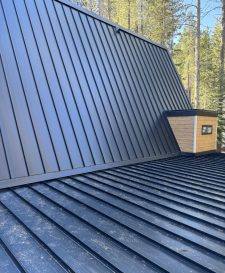
| Standing seam metal | Very good — sheds moisture, little surface for moss to grip | Depends on coating; marine-grade coatings hold up well | Low; occasional inspection of seams and fasteners | 40–50+ years |
| Cedar shake | Poor without diligent upkeep — moss thrives on wood | Neutral; wood itself doesn't corrode | High — regular cleaning and treatment required | 20–30 years with upkeep |
| Synthetic/composite shingle | Good — engineered to resist moisture absorption | Good | Low to moderate | 30–50 years |
For most homes near Lummi Nation, an algae-resistant architectural shingle or a coated standing-seam metal roof gives the best balance of upfront cost and long-term performance against this specific combination of salt air, rain, and moss. Cedar shake can still be the right call for homes where the look matters most, but it comes with a real maintenance commitment in this climate — that's a trade-off worth being upfront about, not a reason to avoid it outright if you're willing to keep up with it.
Our New Roof Installation Process
- On-site inspection and measurement — we walk the roof, check the attic, and assess deck condition, moss coverage, and ventilation before quoting anything.
- Material walkthrough — we go over the realistic options for your roof's exposure and budget, including the trade-offs above.
- Permitting — handled before work starts, coordinated with the applicable local jurisdiction.
- Tear-off and disposal — full removal of old roofing material and responsible disposal.
- Deck repair — any rotted or soft sheathing found during tear-off gets replaced, not covered over.
- Underlayment, ice-and-water membrane, and flashing — installed to the standard described above, with corrosion-resistant fasteners throughout.
- Roofing material installation — installed to manufacturer specification, which is what keeps warranties valid.
- Ventilation check — intake and exhaust confirmed balanced before we close out the job.
- Cleanup and magnetic nail sweep — yard and driveway cleared of debris and stray fasteners.
- Final walkthrough — we go over the finished roof with you before calling the job done.
What Actually Affects the Cost of a New Roof
Roofing costs vary widely based on the specifics of the house, so broad ranges are more honest than a flat number. The main factors:
| Factor | Why It Matters |
|---|---|
| Roof size and pitch | More square footage and steeper pitches mean more material and labor time |
| Number of existing layers | Tearing off multiple old layers takes longer than a single-layer tear-off |
| Deck condition | Rotted sheathing found during tear-off adds material and labor to replace it properly |
| Material choice | Asphalt shingle, metal, and cedar shake sit at different price points and installation complexity |
| Flashing and ventilation complexity | Roofs with multiple valleys, chimneys, or skylights require more detail work |
| Access and site conditions | Steep lots or limited equipment access can add time |
We won't quote a number without seeing the roof — anyone who does is guessing. What we can say honestly is that cutting corners on underlayment, flashing, or fasteners to hit a lower price tends to cost homeowners more within a few years, once salt corrosion or a wind-driven leak shows up.
Why Hiring a Crew That Already Works Near Lummi Nation Matters
A roofing crew that mostly works drier, inland areas doesn't think about salt-resistant fasteners as a default — they think about it if you ask. A crew that regularly works this stretch of Whatcom County treats it as standard practice, because they've seen what happens when it's skipped. The same goes for moss: knowing which slopes on a given roof design tend to stay shaded and damp longest, and detailing ventilation and flashing accordingly, comes from having done the work here repeatedly, not from a general roofing checklist.
There's also the practical side — familiarity with local permitting, faster response when a windstorm off the water causes damage, and a crew that isn't learning the area's quirks on your project for the first time.
Keeping a New Roof Performing After Installation
A correctly installed roof still needs basic upkeep to reach its full lifespan in this climate:
- Inspect for moss growth at least twice a year, especially on shaded, north-facing slopes
- Clear gutters and downspouts regularly so water isn't backing up under the roof edge
- Trim back overhanging branches to reduce shade and debris buildup that feed moss
- Check flashing and seals after any major windstorm, not just annually
- Avoid pressure washing shingles — it strips granules and shortens their lifespan; use low-pressure moss treatments instead
- Keep an eye on fastener heads and flashing edges for early signs of corrosion staining
None of this is complicated, but skipping it is how a well-installed roof ends up needing early attention anyway.
If your roof near Lummi Nation is showing its age, or you just want an honest read on whether repair or replacement makes sense, we're glad to take a look. Use the form below to request a free, no-pressure estimate — we'll walk the roof, tell you what we actually see, and give you a straight answer either way.