 Ferndale Siding
 Metal Roofing for Lummi Nation: Built for This Coastline, Not a Generic Climate
Homes in and around Lummi Nation sit right up against the marine environment that defines this part of Whatcom County — open water, near-constant humidity, and weather that comes off the Strait of Georgia and Bellingham Bay with real force. A roofing system that performs fine forty miles inland can fail years early out here. Metal roofing done correctly is one of the few systems that genuinely holds up to salt air, driving rain, and the long, wet moss season that this region is known for — but "metal roofing" is not one product, and not every crew installs it the same way. This page covers what a metal roof actually needs to do on a Lummi Nation home, what a correct installation looks like, and why local experience on this exact stretch of coastline matters more than it does almost anywhere else in the county.
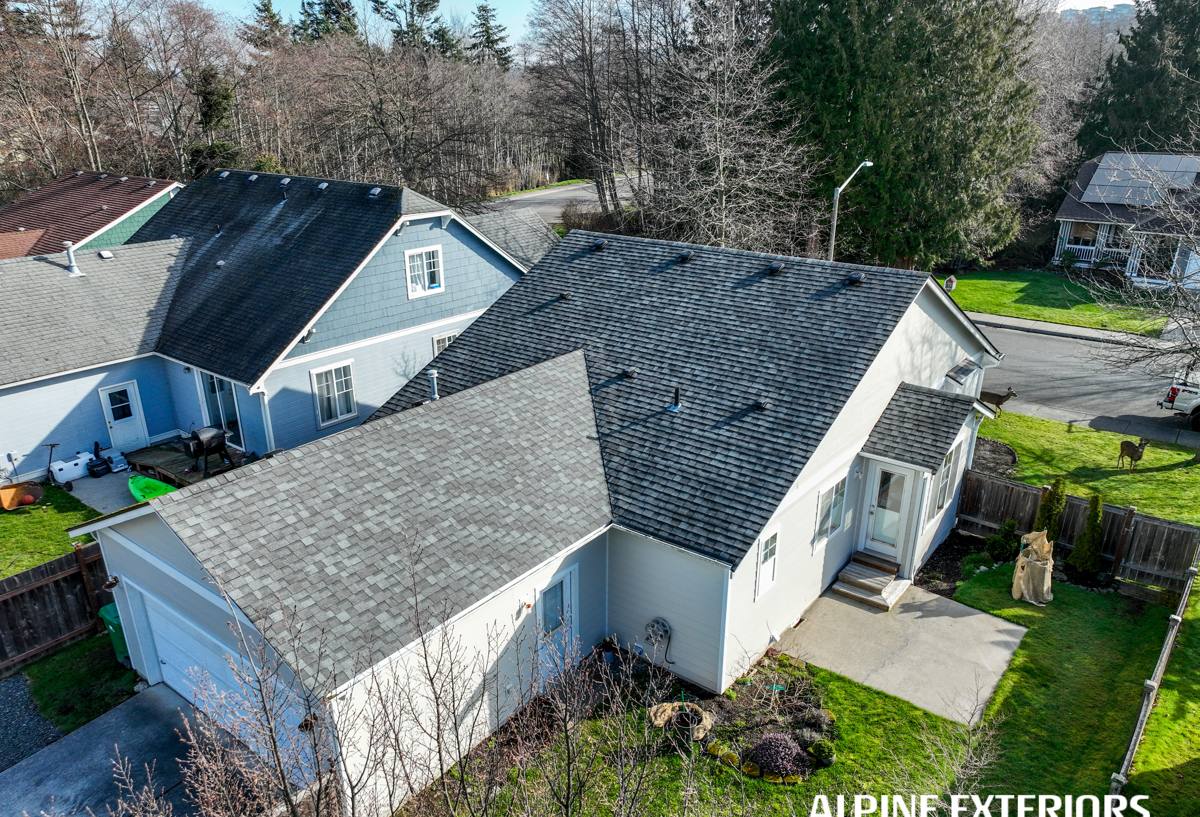
What Salt Air and Marine Exposure Actually Do to a Roof
Salt-laden air doesn't just sit on a roof — it works into every seam, fastener, and cut edge over time. This matters in three specific ways for homes near the water:
Corrosion at the Metal Itself
Bare cut edges, scratched coatings, and dissimilar metals in contact with each other are where corrosion starts on a coastal roof. It's rarely the flat field of the panel that fails first — it's the details around it.
Fastener Failure
Standard fasteners can start showing rust streaks and backing out years before the panels themselves show any wear. On a home this close to saltwater, fastener choice is not a minor spec — it's one of the biggest factors in how long the roof actually lasts.
Trapped Moisture and Moss
Ferndale and the surrounding Whatcom County waterfront get long stretches of damp, low-sun weather. Moss and algae don't just sit on the surface — given a foothold at a poorly lapped seam or a shaded north slope, they hold moisture against the roof for months at a time. On shingle roofs this shortens lifespan significantly; on a properly installed metal roof, it's far less of a threat, but only if the details were done right in the first place.
Choosing the Right Metal System for a Coastal Home
Not every metal roofing profile or coating is a good fit this close to open saltwater. We look at three things before recommending a system for a Lummi Nation home.
Standing Seam vs. Exposed Fastener
Standing seam panels use concealed clips instead of exposed screws through the panel face, which removes the most common long-term failure point on coastal metal roofs — fastener corrosion and the tiny leak paths that follow it. Exposed-fastener panels cost less upfront and can be a reasonable choice on outbuildings, shops, or budget-driven projects, but they need their fasteners re-checked and occasionally replaced over the life of the roof, which is a real maintenance commitment in a salt-air environment.
Coatings and Base Metal
The coating system matters as much as the metal underneath it. A quality Kynar-type (PVDF) finish holds color and resists chalking far longer than basic paint systems, and a proper Galvalume or aluminum base metal resists corrosion better than uncoated steel in this environment. We won't put an interior-grade coating package on a waterfront roof just because it's cheaper — the maintenance and premature-failure risk isn't worth the upfront savings, and we tell homeowners that plainly before they buy.
Fastener and Flashing Hardware
Stainless steel or coated fasteners rated for coastal/marine exposure are standard on our installs in this area — not an upsell. The same goes for flashing metal at valleys, walls, and penetrations: mixing incompatible metals invites galvanic corrosion, so we match materials deliberately rather than grabbing whatever's on the truck.
What a Correct Installation Actually Involves
A metal roof is only as good as what's underneath it and how the details are executed. On every Lummi Nation project, that means:
- A synthetic underlayment rated for the extended dry-in times that Pacific Northwest weather often forces on a job
- Proper ventilation at ridge and eave so trapped moisture has somewhere to go instead of condensing under the panels
- Correctly lapped and sealed seams at every valley, ridge, and transition — the places water actually finds its way in
- Fasteners driven straight and to correct torque, not over- or under-driven, which is one of the most common causes of early leaks on metal roofs installed by inexperienced crews
- Flashing details at chimneys, skylights, and wall intersections built to shed water, not just caulked and hoped for
- Ice-and-water-shield protection at eaves and valleys where wind-driven rain is most likely to be pushed backward under the panel edge
Skipping any one of these doesn't show up on day one. It shows up as a leak three, five, or ten years down the road — often after the original installer is long gone.
Metal Roofing vs. Other Options for This Climate
Homeowners near Lummi Nation often ask how metal actually stacks up against the alternatives once you factor in the local weather, not just sticker price.
| Factor | Metal Roofing | Asphalt Shingle |
|---|---|---|
| Typical lifespan in this climate | 40–60+ years with correct install | 15–25 years, often shorter with heavy moss exposure |
| Moss and algae resistance | High — few footholds for growth on a properly lapped panel | Lower — granule surface holds moisture and gives moss a place to grip |
| Wind-driven rain performance | Strong when seams and flashing are done correctly | Adequate, but shingle uplift is a recurring coastal issue |
| Salt air corrosion risk | Low with correct coatings and fasteners | Not applicable — but granule loss accelerates near salt spray |
| Upfront cost | Higher | Lower |
| Long-term cost per year of service | Often lower once lifespan is factored in | Higher, due to earlier replacement and moss-related maintenance |
Metal isn't automatically the right call for every home or every budget — but for waterfront and near-waterfront properties around Lummi Nation, the math tends to favor it once you look past the first invoice.
Cost Factors Homeowners Should Actually Understand
Every metal roofing quote in this area should account for the specifics of the home, not a flat per-square rate. The main drivers we walk homeowners through:
| Cost Factor | Why It Matters Here |
|---|---|
| Roof pitch and complexity | Steep or cut-up rooflines take longer to flash correctly, especially with multiple valleys |
| Tear-off vs. overlay | Existing moss or trapped moisture under old shingles often makes a full tear-off the honest recommendation |
| Decking condition | Long-term moisture exposure near the water can mean hidden decking repair before panels ever go on |
| Panel profile and coating grade | Marine-grade coatings and standing seam systems cost more upfront but reduce corrosion risk substantially |
| Fastener and flashing spec | Coastal-rated hardware costs more than standard hardware but is not optional this close to saltwater |
Maintenance That Actually Matters in a Wet, Mossy Climate
A correctly installed metal roof needs far less maintenance than a shingle roof, but "far less" isn't "none." A short annual check catches most issues before they become leaks:
- Clear debris and organic buildup from valleys and around penetrations before it holds moisture
- Check for any moss establishing at shaded, north-facing slopes or areas with reduced airflow
- Look at exposed fasteners (if applicable) for early rust streaking or backing-out
- Inspect flashing at chimneys, skylights, and wall transitions for sealant wear
- Confirm gutters and downspouts are clear so water isn't backing up under the eave edge
Our Process, From Estimate to Final Walkthrough
We keep the process straightforward because homeowners near Lummi Nation deserve a clear answer, not a sales pitch.
- On-site assessment — we look at the existing roof, decking condition, ventilation, and exposure level specific to your property's position relative to the water and prevailing wind.
- Honest system recommendation — standing seam, exposed fastener, coating grade, and fastener spec, explained in plain terms along with the trade-offs of each.
- Written estimate — scope, materials, and cost factors laid out clearly, with no vague allowances buried in the fine print.
- Installation — proper underlayment, ventilation, flashing, and fastening done to spec, not shortcuts to hit a lower number.
- Final walkthrough — we go over the finished roof with you before we consider the job done.
Why a Crew That Already Works Lummi Nation Matters
Roofing crews that mostly work inland jobs don't always account for what this specific stretch of Whatcom County coastline demands — the fastener spec, the coating grade, the flashing details at wind-exposed edges. A crew that already works Lummi Nation and the surrounding waterfront area has already made the adjustments that matter: material choices that hold up to salt air, sequencing that accounts for driving rain during install, and an eye for the moss patterns specific to this microclimate. That familiarity shows up in fewer callbacks and a roof that's still doing its job twenty years from now, not just twenty months.
If you're weighing a metal roof for a home in or near Lummi Nation, we're happy to take a look and give you a straightforward, no-pressure estimate — what your roof actually needs, what it costs, and why. There's a form below to get that conversation started.