 Ferndale Siding
 Board & Batten Siding for Kendall's Wooded Lots
Kendall sits further inland and up in elevation than the coastal stretch of our Ferndale service area, in the more wooded, rural part of Whatcom County. Lots out here tend to be larger and more heavily treed than an in-town Ferndale property, and that changes both the look homeowners want and the way a home's exterior actually weathers. Board and batten is a natural fit for this setting — the vertical lines read as farmhouse, cabin, or modern-rustic depending on color and trim choice, and it suits the wooded, spread-out character of Kendall better than a straight run of horizontal lap siding does on a lot of these homes.
We install James Hardie fiber cement exclusively, and board and batten is one of the profiles we get asked about most often out this way. Done correctly, it's a durable, good-looking system. Done wrong — wrong furring, wrong joint detail, wrong material underneath the battens — it's one of the faster ways to trap moisture against a wall. We want Kendall homeowners to understand the difference before they hire anyone, us included.
What Kendall's Climate Does to Vertical Siding
Salt-Laden Marine Air Reaching Inland
Kendall isn't waterfront, but it's not sealed off from the marine weather that moves through Whatcom County either. Wind off the Salish Sea and Bellingham Bay pushes moist, salt-carrying air inland on a regular basis, and that airborne salt settles on exterior surfaces the same way it does closer to the water, just in smaller doses over time. On vertical siding it tends to collect at horizontal transitions — under window sills, along trim caps, at the base of battens — anywhere air movement slows and moisture has a place to sit. Fasteners and trim that aren't rated for that kind of exposure corrode faster than most homeowners expect for a property this far from the shoreline.
Driving Rain and Vertical Reveals
Vertical siding sheds water differently than horizontal lap siding does. Board and batten relies on the batten strips and the panel joints underneath them to keep water moving down and off the wall rather than settling into a seam. When wind-driven rain hits a wall at an angle, which happens often in this part of the county during fall and winter storm systems, a poorly detailed batten joint can let water track sideways behind the board instead of running off the face. That's a slower, more hidden failure than a visibly leaking roof, and it's usually further along by the time it shows up as staining or soft trim.
A Long Moss Season Under Heavy Tree Cover
Kendall's tree cover is heavier than most of the rest of our service area, and that shade keeps walls damp longer after a storm passes. Combined with the region's already long moss season, north-facing and tree-shaded walls out here can stay wet for days at a stretch during the wet months. Moss and mildew growth on siding isn't just cosmetic — it holds moisture directly against the wall surface, and on a board and batten wall it tends to concentrate right at the batten edges, which is exactly where you don't want standing moisture over the course of a winter.
The James Hardie Board & Batten System We Install
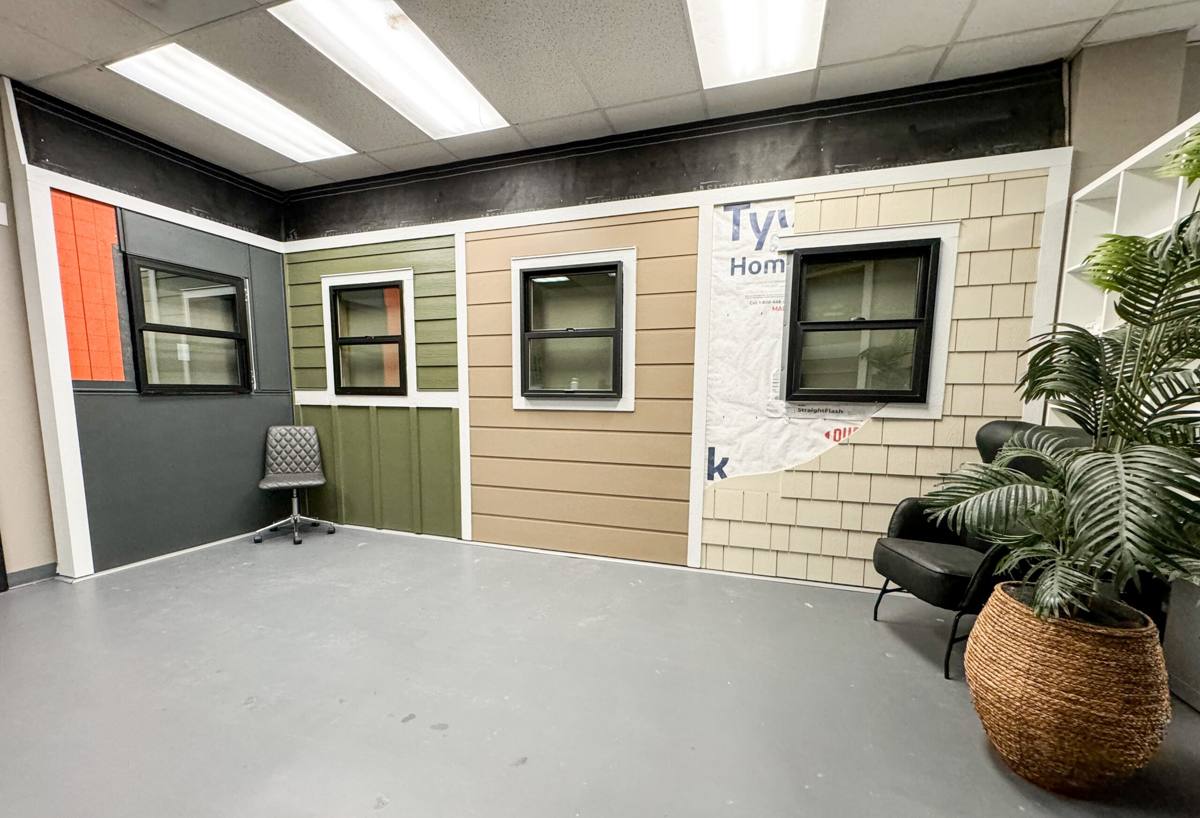
Board and batten with fiber cement isn't a single product — it's a system built from a few Hardie components working together, and getting the combination right matters as much as the material itself.
- HardiePanel vertical siding: The flat fiber cement panel that forms the base plane of the wall, installed over a properly prepared water-resistive barrier.
- Batten strips: Vertical trim pieces installed over the panel joints, creating the classic board and batten shadow line while covering and protecting the seam underneath.
- HardieTrim boards: Factory-finished trim at corners, window and door casings, and wherever the wall plane transitions, matched to resist the same moisture exposure as the field panels.
- ColorPlus factory finish: Baked-on color and coating applied under controlled conditions, which holds up far longer against UV, moisture, and salt-laden air than field-applied paint on the panels or battens.
For a property in Kendall's climate, we spec Hardie's climate-engineered HZ5 formulation, built for regions with sustained moisture exposure rather than the standard formulation meant for drier climates. It's a small spec-sheet difference that has a real effect on how the wall performs over a decade of wet Whatcom County winters.
What Correct Board & Batten Installation Involves
Rain Screen and Furring
The single biggest factor in whether a board and batten wall performs well long-term is what happens behind the panel, not on the face of it. A furring strip system creates an air gap — a rain screen — between the back of the siding and the water-resistive barrier, letting any moisture that does get past the outer surface drain and dry out instead of sitting against the sheathing. Skipping the rain screen to save labor is one of the more common shortcuts we see on board and batten jobs done by crews unfamiliar with this climate, and it's one of the more consequential ones in a wet, shaded setting like Kendall.
Panel Joints and Battens
Every horizontal and vertical joint in the panel field needs to be treated as a place water will eventually try to get in, not as a spot to caulk and move on. Battens have to land squarely over the vertical joints with enough coverage to shed water past the seam, and horizontal joints need proper flashing rather than a bead of sealant doing all the work. Sealant fails over time; flashing doesn't.
Flashing and Fastening
Window and door openings, wall-to-roof transitions, and any place a lower wall plane meets an upper one all need flashing detail that directs water out and away from the wall assembly. Fasteners should be corrosion-resistant and set according to Hardie's published spec for panel thickness and exposure — not just whatever's on the truck. Given the salt-laden air that reaches Kendall on a regular basis, we don't cut corners on fastener grade here.
Comparing Board & Batten Material Options
| Material | How It Handles This Climate | Long-Term Trade-Off |
|---|---|---|
| James Hardie fiber cement | Non-combustible, dimensionally stable, factory-finished; holds up well under sustained moisture and salt exposure with correct installation | Higher install-labor sensitivity — needs a crew that details joints and rain screen correctly |
| Cedar board and batten | Traditional look, but wood absorbs moisture and is a direct food source for the moss and mildew this area produces in volume | Ongoing refinishing, higher rot risk in shaded, damp locations |
| Vinyl board and batten | Low material cost, but can warp or crack under temperature swings and doesn't hold paint or color depth the way fiber cement does | Shorter realistic service life, limited repair options if damaged |
| Engineered wood (LP SmartSide) | Wood-based core is more moisture-sensitive at cut edges and panel joints than fiber cement | Edge and joint failures show up faster in a sustained-moisture climate like Kendall's |
We install Hardie exclusively, for the reasons in that table and others like it we've weighed over years of exterior work in this county. Wood and engineered-wood board and batten can look great initially, but the moisture behavior in a shaded, wet climate like Kendall's is the trade-off that matters most once the siding's been on the wall for a few winters.
Our Process for a Kendall Board & Batten Project
Assessment
We walk the property and look at the specific factors that matter for board and batten here: tree cover and shading pattern on each wall, existing moisture or rot at the base of the walls, current flashing condition, and how exposed the home is to prevailing wind and rain direction. That assessment shapes the furring, flashing, and fastening spec for the job — we don't apply a generic detail package to every home.
Prep and Installation
Old siding comes off, the sheathing gets inspected and repaired where needed, and the water-resistive barrier and furring go on before a single panel is hung. Panels and battens go up to Hardie's spec for this climate zone, with flashing installed at every transition rather than patched in with sealant afterward.
Finish and Walkthrough
Trim, caulking at the appropriate joints (not as a substitute for flashing, but as the final seal it's meant to be), and a walkthrough where we show the homeowner what was done and why, including any furring or flashing decisions specific to their property's shading and exposure.
Is Your Kendall Home Ready for Board & Batten?
- Current siding checked for hidden rot or soft spots, especially at the base of walls and under windows
- Shaded and tree-covered wall sections identified for extra attention to rain screen and drainage
- Existing flashing at windows, doors, and roof transitions inspected for cracking or gaps
- Grade and drainage around the foundation confirmed so siding clearance isn't compromised
- Any nearby trees or overhanging limbs noted for how they'll affect drying time and long-term moss growth
Cost Factors for Board & Batten Work in Kendall
| Factor | What It Affects | Why It Matters in Kendall |
|---|---|---|
| Rain screen / furring system | Labor and material for the drainage gap behind the panels | Essential in a shaded, wet climate where walls stay damp longer after a storm |
| Substrate condition | Repair costs uncovered once old siding comes off | Heavy tree cover and long moss seasons can mean more hidden moisture damage than expected |
| Site access | Labor time, staging, and equipment needs | Larger, wooded rural lots can have longer driveways and less flat staging area than an in-town lot |
| Trim and corner detail | Amount of factory-finished HardieTrim required | Board and batten uses more linear trim footage than lap siding of the same wall area |
| Fastener and flashing grade | Material cost and corrosion resistance | Salt-laden marine air reaching this far inland calls for corrosion-resistant hardware, not standard-grade |
Exact pricing depends on the home's size, current condition, and site access, which is why we give a real number after walking the property rather than a phone estimate.
Why a Crew That Works Kendall Regularly Matters
A lot of siding crews are comfortable with horizontal lap siding on a standard in-town lot and less experienced with the specific demands of a board and batten install on a larger, tree-shaded rural property. The rain screen detail, the batten-over-joint coverage, and the flashing decisions all get more consequential when a wall is going to stay damp longer because of shade and elevation, and a crew that's done this work across Kendall's wooded lots knows which walls need the extra attention before the first panel goes up rather than finding out after a callback. We work this part of Whatcom County regularly enough to know how the local combination of salt-carrying wind, driving rain, and heavy tree cover actually plays out on a real wall over several winters, not just on a spec sheet.
What to Expect When You Call Us
We'll walk the property with you, look at the shading, exposure, and existing condition of your siding, and give you an honest read on whether board and batten is the right fit for your home and what a correct installation will involve. There's no pressure and no generic quote — just a straightforward look at what your Kendall property actually needs. Reach out using the form below to schedule a free, no-pressure estimate.